
The appearance of code-generating Large Language Models (LLMs) has marked a big breakthrough. These models, able to understanding and generating code, are revolutionizing how developers approach coding tasks. From automating mundane tasks to fixing complex bugs, LLMs promise to scale back development time and improve code quality significantly. Accurately assessing these models’ capabilities stays a challenge. Evaluation benchmarks, while foundational, offer a narrow window into the vast landscape of software development, focusing totally on basic programming tasks or limited data science applications. This narrow focus falls wanting capturing developers’ diverse challenges, highlighting the necessity for a more comprehensive evaluation method.
Google DeepMind introduces Round-Trip Correctness (RTC), an revolutionary evaluation method that broadens the assessment horizon of code LLMs. Unlike conventional benchmarks that depend on manual curation of tasks, RTC adopts an unsupervised approach, enabling evaluations across a wider array of real-world software domains without requiring exhaustive manual effort. The essence of RTC lies in its unique evaluation framework, where a model predicts a coding task and its inverse, similar to generating code from an outline and vice versa. This method evaluates the model’s ability to take care of the semantic integrity of the unique input throughout the round-trip, offering a nuanced measure of its understanding and generation capabilities.
By leveraging the model’s performance on each forward and reverse tasks, RTC assesses its code synthesis and editing proficiency, amongst other applications. This approach evaluates the model’s accuracy in generating semantically correct code and its effectiveness in understanding and interpreting code descriptions. The adaptability of RTC extends to varied coding tasks and domains, showcasing its potential as a universal framework for model evaluation.
Demonstrating a powerful correlation with model performance on established narrow-domain benchmarks, RTC also reveals its capability to facilitate evaluations in a broader range of software domains. This comprehensive assessment is pivotal for developing LLMs which can be more attuned to the multifaceted needs of software development. The insights gained from RTC evaluations are invaluable for guiding the evolution of code-generating models, ensuring they’re robust, versatile, and aligned with real-world development challenges.
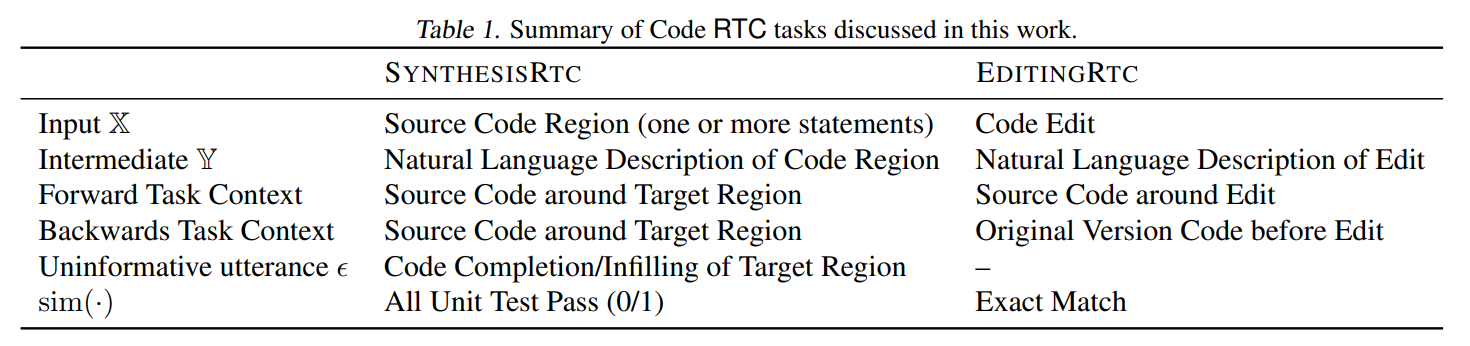
In conclusion, the introduction of Round-Trip Correctness as a technique for evaluating code LLMs represents a big advancement in the sphere. This method offers:
- A comprehensive and unsupervised approach to model evaluation extends beyond the constraints of traditional benchmarks.
- The potential to evaluate models across a various spectrum of software domains, reflecting the real-world challenges of software development.
- Insights into LLMs’ code generation and understanding capabilities, fostering the event of more practical and adaptable models.
By bridging the gap between narrow-domain benchmarks and the expansive needs of software development, RTC paves the way in which for the subsequent generation of code-generating LLMs. These models promise to be more in tune with developers’ diverse needs, ultimately enhancing the efficiency and quality of software development processes.
Take a look at the Paper. All credit for this research goes to the researchers of this project. Also, don’t forget to follow us on Twitter and Google News. Join our 38k+ ML SubReddit, 41k+ Facebook Community, Discord Channel, and LinkedIn Group.
When you like our work, you’ll love our newsletter..
Don’t Forget to affix our Telegram Channel
It’s possible you’ll also like our FREE AI Courses….

Hello, My name is Adnan Hassan. I’m a consulting intern at Marktechpost and shortly to be a management trainee at American Express. I’m currently pursuing a dual degree on the Indian Institute of Technology, Kharagpur. I’m keen about technology and need to create latest products that make a difference.