
Large language models, or LLMs, have transformed how machines understand and generate text, making interactions increasingly human-like. These models are on the forefront of technological advancements, tackling complex tasks from answering inquiries to summarizing vast amounts of text. Despite their prowess, a pressing query looms over their reasoning abilities: How reliable and consistent are they of their logic and conclusions?
A selected area of concern is self-contradictory reasoning, a scenario where the model’s logic doesn’t align with its conclusions. This discrepancy raises doubts in regards to the soundness of the models’ reasoning capabilities, even once they churn out correct answers. Traditional evaluation metrics focused heavily on outcomes like accuracy fall in need of scrutinizing the reasoning process. This oversight implies that a model is perhaps rewarded for the appropriate answers, which were arrived at through flawed logic, thereby masking the underlying issues in reasoning consistency.
Researchers from the University of Southern California have introduced a novel approach to scrutinize and detect instances of self-contradictory reasoning in LLMs to deal with this gap. This method goes beyond surface-level performance indicators, delving into the models’ reasoning processes to discover inconsistencies. It categorizes these inconsistencies, offering a granular view of where and the way models’ logic falters. This approach is a big step forward, promising a more holistic evaluation of LLMs by spotlighting the alignment, or lack thereof, between their reasoning and predictions.
The methodology assesses reasoning across various datasets, pinpointing inconsistencies that previous metrics might overlook. This evaluation is crucial in understanding how much models may be trusted to make logical, consistent conclusions. Particularly, the study harnesses the facility of GPT-4, amongst other models, to probe the depths of reasoning quality. It fastidiously examines different reasoning errors, classifying them into distinct categories. This classification illuminates the precise areas where models struggle and sets the stage for targeted improvements in model training and evaluation practices.
Despite achieving high accuracy on quite a few tasks, LLMs, including GPT-4, reveal a propensity for self-contradictory reasoning. This alarming statement indicates that models often resort to incorrect or incomplete logic pathways to reach at correct answers. Such a paradox underscores a critical flaw in relying solely on outcome-based evaluation metrics like accuracy, which might obscure the underlying reasoning quality of LLMs. This discovery calls for a paradigm shift in how we assess and understand the capabilities of those advanced models.
The study’s performance evaluation and detection of self-contradictory reasoning highlight the urgent need for more nuanced and comprehensive evaluation frameworks. These frameworks must prioritize the integrity of reasoning processes, ensuring that models are accurate, logically sound, and reliable. The research points to a big gap in current evaluation methods, advocating for a holistic approach that considers the correctness of answers and the logical coherence of the reasoning resulting in those answers.
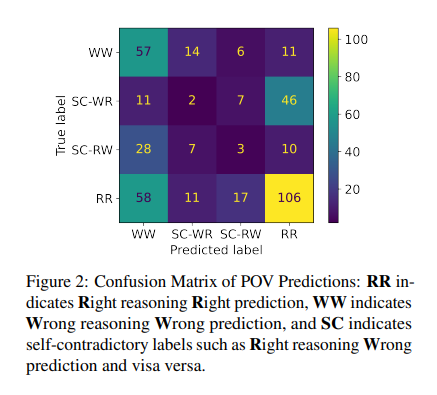
In conclusion, this research casts a highlight on the critical issue of self-contradictory reasoning in LLMs, urging a reevaluation of how we gauge these models’ capabilities. Proposing an in depth framework for assessing reasoning quality paves the way in which for more reliable and consistent AI systems. This endeavor is about critiquing current models and laying the groundwork for future advancements. It’s a call to motion for researchers and developers to prioritize logical consistency and reliability in the following generation of LLMs, ensuring they’re powerful and trustworthy.
Take a look at the Paper. All credit for this research goes to the researchers of this project. Also, don’t forget to follow us on Twitter and Google News. Join our 38k+ ML SubReddit, 41k+ Facebook Community, Discord Channel, and LinkedIn Group.
In the event you like our work, you’ll love our newsletter..
Don’t Forget to hitch our Telegram ChannelIt’s possible you’ll also like our FREE AI Courses….

Hello, My name is Adnan Hassan. I’m a consulting intern at Marktechpost and shortly to be a management trainee at American Express. I’m currently pursuing a dual degree on the Indian Institute of Technology, Kharagpur. I’m enthusiastic about technology and wish to create recent products that make a difference.