
For too long, the world of natural language processing has been dominated by models that primarily cater to the English language. This inherent bias has left a significant slice of the worldwide population feeling underrepresented and ignored. Nevertheless, a groundbreaking latest development is ready to challenge this establishment and usher in a more inclusive era of language models – the Chinese Tiny LLM (CT-LLM).
Imagine a world where language barriers are not any longer an obstacle to accessing cutting-edge AI technologies. That’s precisely what the researchers behind CT-LLM have set out to attain by prioritizing the Chinese language, one of the widely spoken on this planet. This 2 billion parameter model departs from the standard approach of coaching language models totally on English datasets after which adapting them to other languages.
As a substitute, CT-LLM has been meticulously pre-trained on a staggering 1,200 billion tokens, with a strategic emphasis on Chinese data. The pretraining corpus comprises a powerful 840.48 billion Chinese tokens, complemented by 314.88 billion English tokens and 99.3 billion code tokens. This strategic composition not only equips the model with exceptional proficiency in understanding and processing Chinese but in addition enhances its multilingual adaptability, ensuring that it will possibly navigate the linguistic landscapes of diverse cultures with ease.
But that’s not all – CT-LLM incorporates cutting-edge techniques contributing to its exceptional performance. One such innovation is supervised fine-tuning (SFT), which bolsters the model’s adeptness in Chinese language tasks while concurrently enhancing its versatility in comprehending and generating English text. Furthermore, the researchers have employed preference optimization techniques, akin to DPO (Direct Preference Optimization), to align CT-LLM with human preferences, ensuring that its outputs aren’t only accurate but in addition harmless and helpful.
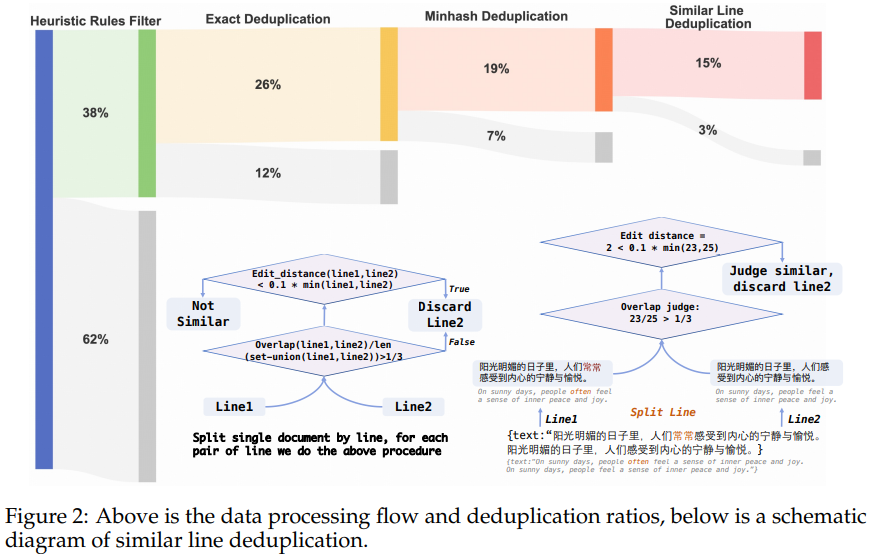
To place CT-LLM’s capabilities to the test, the researchers developed the Chinese Hard Case Benchmark (CHC-Bench), a multidisciplinary suite of difficult problems designed to evaluate the model’s instruction understanding and following abilities within the Chinese language. Remarkably, CT-LLM demonstrated outstanding performance on this benchmark, excelling in tasks related to social understanding and writing, showcasing its strong grasp of Chinese cultural contexts.
The event of CT-LLM represents a big stride towards creating inclusive language models that reflect the linguistic diversity of our global society. By prioritizing the Chinese language from the outset, this groundbreaking model challenges the prevailing English-centric paradigm and paves the way in which for future innovations in NLP that cater to a broader range of languages and cultures. With its exceptional performance, progressive techniques, and open-sourced training process, CT-LLM stands as a beacon of hope for a more equitable and representative future in the sphere of natural language processing. In the long run, language barriers are not any longer an impediment to accessing cutting-edge AI technologies.
Try the Paper and HF Page. All credit for this research goes to the researchers of this project. Also, don’t forget to follow us on Twitter. Join our Telegram Channel, Discord Channel, and LinkedIn Group.
If you happen to like our work, you’ll love our newsletter..
Don’t Forget to hitch our 40k+ ML SubReddit

Vibhanshu Patidar is a consulting intern at MarktechPost. Currently pursuing B.S. at Indian Institute of Technology (IIT) Kanpur. He’s a Robotics and Machine Learning enthusiast with a knack for unraveling the complexities of algorithms that bridge theory and practical applications.