
In partnership withGS1 US
Tracking a Big Mac hamburger’s journey from ranch to fast-food restaurant isn’t easy. Today’s highly segmented beef supply chain consists of a big selection of ranches, feedlots, packers, processors, distribution centers, and restaurants, each with its own set of rigorously collected data. Yet in today’s complex digital world, organizations need more visibility than ever to administer inventory, know where products are coming from, and maintain consumer trust, says Bob Carpenter, president and CEO of GS1 US, a not-for-profit, international supply-chain standards organization.
Unlocking supply chain resiliency
To administer this wealth of knowledge, industries use considered one of the best and most reliable data standards: the barcode. This ubiquitous machine-readable set of parallel lines encodes unique identification numbers for many items at points of sale across the globe. Although a Big Mac is rarely scanned, the journey of its ingredients is known and communicated using these standards.
To achieve greater visibility into its supply chain, fast-food restaurant giant McDonald’s teamed up with supplier Golden State Foods in a pilot project that uses radio-frequency identification (RFID) technology to routinely track fresh beef’s movement from manufacturer to restaurant in near real-time. This strategy guarantees to “create a golden digital thread of traceability, giving partners across our ecosystem the knowledge they should construct trust, improve transparency, and drive value,” says Sue Fangmann, U.S. supply chain services director for McDonald’s.
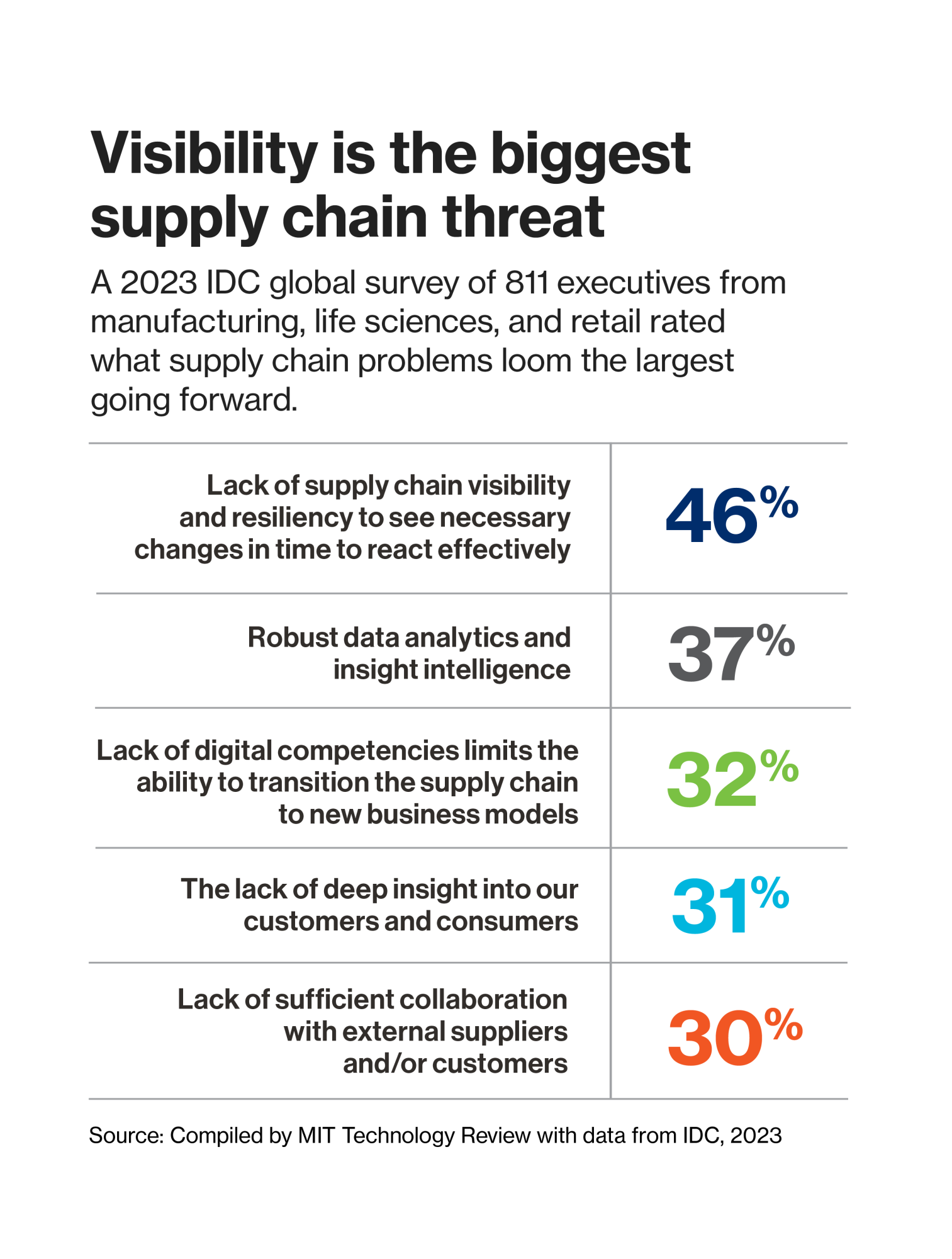
Welcome to the “phygital” universe where assets from the physical and digital worlds are blended to unlock vast volumes of knowledge. Lately, labor shortages, transportation failures, and political volatility have contributed to severe supply chain disruptions. Organizations like McDonald’s are discovering phygital tools can address these difficulties by merging the efficiency and agility of technology, including artificial intelligence (AI)—with help from physical object identifiers—to create faster, more accurate, more transparent, and more resilient supply chains.