
There was one individual Olympic spot left. In keeping with the intricate algorithm governing who gets slots for the games, it could come all the way down to who placed highest within the high bar final: Croatia’s Tin Srbić or Brazil’s Arthur Nory Mariano.
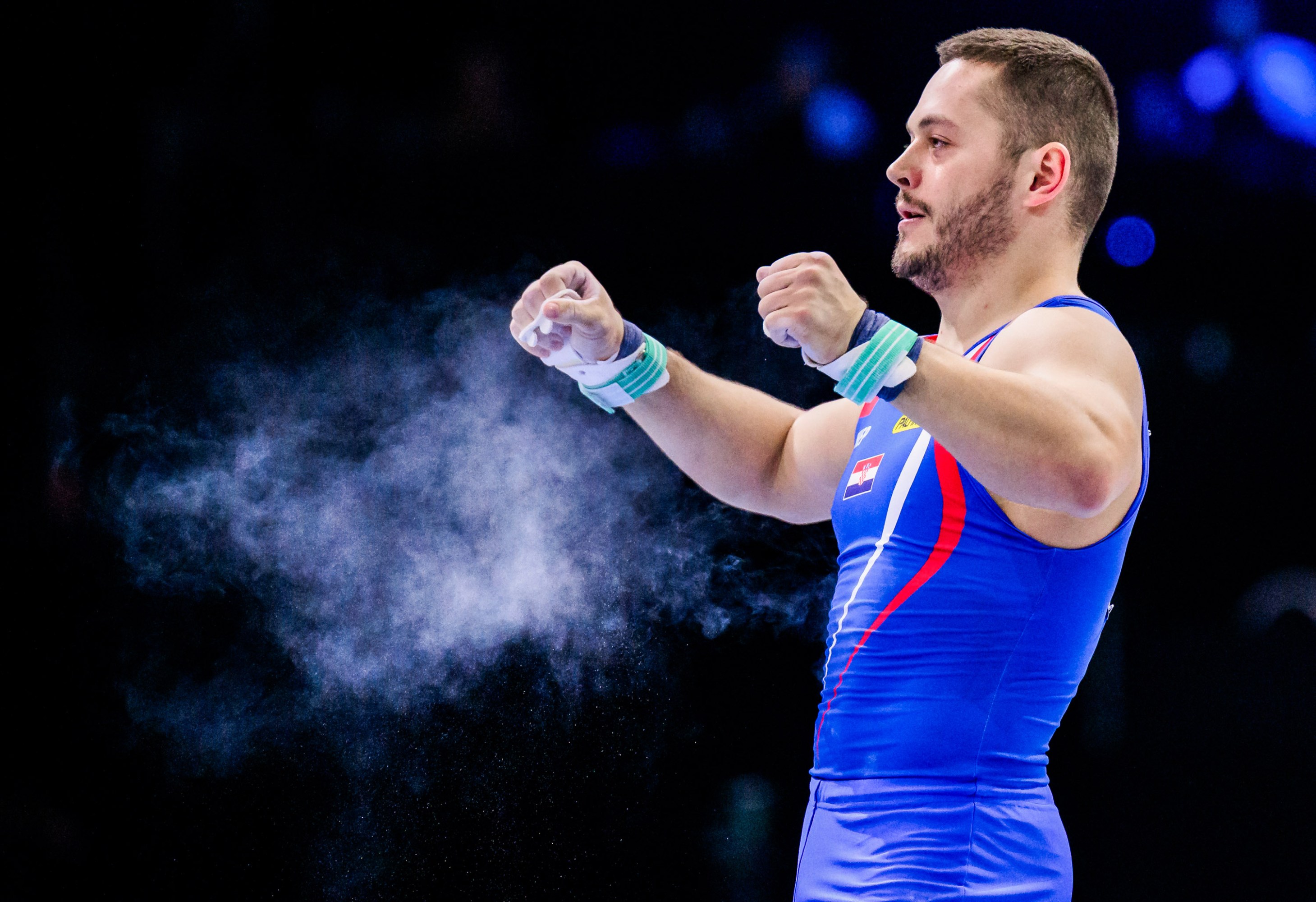
They were on the 2023 World Championships in Antwerp, Belgium, last October. Mariano went first. He fell during his routine, giving Srbić some wiggle room. He didn’t need it, though: Srbić accomplished a clean routine, with Tkachev connections and a double-twisting double layout that he stuck cold; at the tip of his routine, he pumped his fists within the air in celebration. He’d qualified for the 2024 Paris Olympics.
But when his rating got here in—a 14.500—Srbić thought the judges had made a mistake, one that would cost him a medal at Worlds. He needed to make a decision if he desired to make a challenge.
“Whenever you make an inquiry, you may never make certain about what the judges did in the primary place, so you’ve gotten to make your best guess,” says David Kikuchi, an elite gymnastics coach from Canada. “There’s also the danger of your rating taking place after a review.”
Srbić took the gamble—although there was a brand new element of risk on this case. Because it seems, it wasn’t the standard judge that will resolve whether he’d the truth is landed all his maneuvers. It was AI.
Srbić’s routine, like all routines on the competition, had been captured by a handful of high-definition cameras, which together had built a three-dimensional image of his body because it moved. The footage had then been fed into AI software that was able to investigate each angle and movement to a specificity beyond the capabilities of the human eye.
These championships were the primary time the technology, formally often called the Judging Support System, or JSS, had been used on every apparatus in a gymnastics competition—and its first use in a contest that would make or break an athlete’s Olympic dreams. While the AI judging system didn’t replace human judges—moderately, it was available to assist judges review routines in case of an inquiry or a “blocked rating”—it still marked a watershed moment for the game that was years within the making. The International Gymnastics Federation (often called FIG, its initials in French) first used JSS to evaluate pommel horse, rings, and vault back on the 2019 World Championships before adding more events at different competitions annually.
There are obvious upsides to using this type of technology in competition. Human gymnastics judges should have an eye fixed for quick, tiny movements: the purpose of a toe, the angle of a split (), the slightest bend on the hip. AI could help take the guesswork out of the technicalities. And whilst AI has been shown to perpetuatebias in other fields, from housing to hiring, JSS proponents imagine it may well eliminate biases on this case, making the game each more fair and more transparent for viewers and for the gymnasts themselves.
“There are plenty of 50/50 decisions that judges must make during competitions,” says FIG’s Steve Butcher, who previously served as sport director for the organization and is now the president of the element-recognition working group for Fujitsu, the corporate that developed the AI. “Nobody desires to make the fallacious call within the Olympic Games or World Championships or any competition where something major could be on the road.”
At the identical time, others fear AI judging will take away something that makes gymnastics special. Gymnastics is a subjective sport, like diving or dressage, where aspects like nationality, body type, the situation of a judge’s chair, and vague concepts like “artistry” and “performance” affect scores. Technology could eliminate the judges’ role in crafting a narrative. Consider that Nadia Comaneci’s first “perfect” 10 on the 1976 Olympics wasn’t perfect; she shuffled her feet on her landing. However the routine went down in gymnastics history because of creative judging, a reward for a certain Comaneci delivered to the mat.
“You may have to have just a little little bit of subjectivity in the game,” says Kim Tanskanen, an elite gymnastics coach from Finland. “To take that every one away, for me, takes away the fun of the game and the thrill of it.”
For higher or worse, AI has officially infiltrated the world of gymnastics. The query now is whether or not it really makes it fairer.
“The time to bring innovation to gymnastics has come”
The Judging Support System began with a joke.
Back in 2015, Morinari Watanabe was leading the Japanese Gymnastics Association and was on the verge of being elected the FIG’s ninth president and the primary from Asia. He was having a conversation with Hidenori Fujiwara, the pinnacle of the sports business development division at Tokyo-based technology company Fujitsu, and Watanabe quipped that pretty soon, robots could be judging gymnastics competitions.
But Fujiwara took it as an task. “So we began the project,” he says. “We developed a prototype system and showed Watanabe.”
Watanabe was surprised—but in addition impressed. He soon became a proponent of an AI judging system, saying in his October 2016 speech accepting the leadership of the FIG, “The time to bring innovation to gymnastics has come.”
For greater than a decade, the game’s judges had used video review to deal with scoring inquiries. But there was still a necessity for a system that would catch errors the human eye couldn’t. Human judges can sometimes miss the tiny measurements that could make or break a rating—if a split is one or two degrees wanting the minimum required, or if a dismount is off axis by just three or 4 degrees. Within the wake of sanctions disciplining judges for scoring irregularities around the identical time Watanabe became president, he pledged to “add Japanese technology so I can improve the fairness and justice of gymnastics.”
It became official in 2017, when the FIG formally announced its collaboration with Fujitsu. Developing the system took hundreds of hours of research and work. “We began the project although we didn’t have the technology to appreciate it,” says Fujiwara, who’s now the JSS project manager at Fujitsu.
Initially deploying the identical laser sensors which might be used to operate autonomous vehicles, they began gathering three-dimensional skeletal data of gymnasts in competitions. Then, drawing from video footage of 8,000 routines, the AI model was trained on the whole Code of Points, the definitive guide to each element, or skill, a gymnast might perform. The system needed to be taught the difference between a component and an interval between elements, in addition to how much, or how little, movement constitutes “stopping.” It was taught what sorts of variation in a skill (like a split leap at lower than 135 degrees) calls for which deduction.
Today’s JSS system now not relies on lasers but uses 4 to eight high-definition cameras positioned at each apparatus to capture a three-dimensional view of a gymnast’s performance, analyzing positions of the joints after which comparing those positions with the standards for every element within the Code of Points—almost in real time.
Barring any physical obstructions—like a coach blocking the camera’s view of the athlete, as an example—JSS can judge single skills and full routines, just as human judges do. It could possibly recognize about 2,000 elements, in keeping with Fujitsu spokesperson Hidetoshi Tomisaka, with about 90% accuracy when put next to a human making the identical identification.
But while using the technology has expanded since its initial deployment on the 2019 World Championships, it’s still limited. It’s as much as the Superior Jury—a panel of judges who supervise competitions and settle disputes—to make a decision when JSS will probably be used. Even then, it only comes into play to resolve inquiries, by which athletes challenge their difficulty rating, or when there may be a big disagreement between a judge and a supervisor, which is often called a blocked rating. JSS isn’t currently used to make determinations about artistry, and it still isn’t considered able to use on certain complex routine components, like beam connections and dance elements on floor; the tech just isn’t there yet, says Johanna Gratt, a member of the FIG technical committee and liaison between the FIG and Fujitsu.
Guarantees of fair play
The FIG promised in a 2021 news release that JSS could be “one in all the best technical advancements in the game in many years,” in no small part because it may well do things which might be beyond human capabilities.
Initially, some judges anxious that the system would replace them, says Butcher, who has been closely involved within the deployment of JSS. But, he explains, “I feel we’ve proven over time that this was purported to be an aid for the judges.”
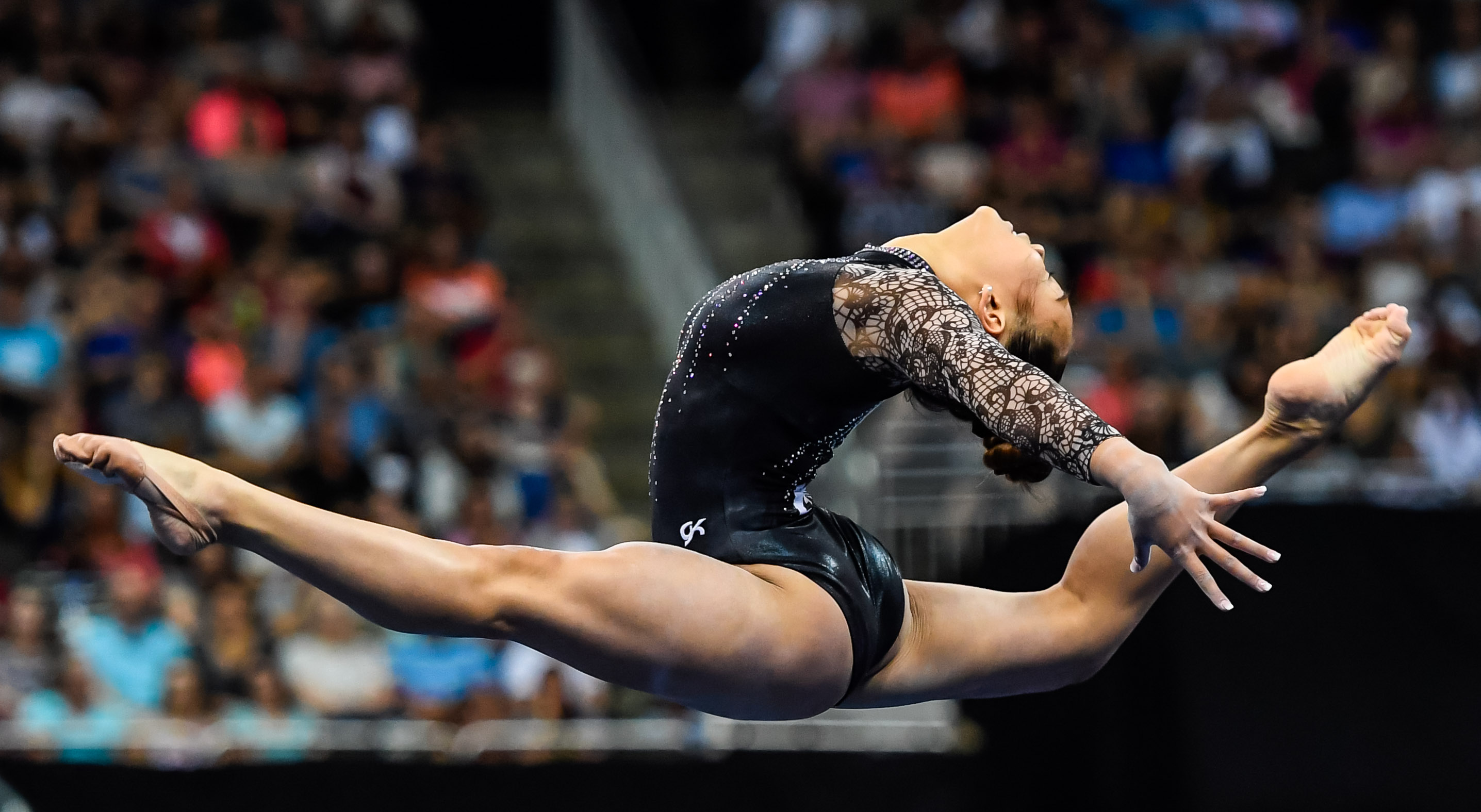
Consider the switch ring leap, an iconic skill on floor and beam by which a gymnast leaps right into a split position with the back leg bent and the pinnacle thrown back. It’s notorious for being downgraded in the problem rating. That’s because judges are especially strict with it—in keeping with the Code of Points, for the move to get full credit, the upper back should be in an arch and the pinnacle released. The legs must reach a 180-degree split. The front leg should be horizontal and the back leg bent, with the back foot reaching the crown of the pinnacle or higher. All this happens, and is judged, in under a second. Human errors are inevitable.
On the 2023 World Championships, JSS was in a position to correct just these sorts of errors. Australia’s Clay Mason Stephens filed an inquiry into his pommel horse rating, and after it was reviewed using JSS, the rating was raised greater than three points. Not all the weather of his routine had been counted by the human judges, which had resulted in a “short exercise” deduction.
JSS supporters also hope AI in gymnastics can have the facility to eliminate the inevitable biases that humans bring to the judging booth. Because it currently stands, judging isn’t particularly transparent; coaches and gymnasts agree it’s difficult to inform what goes on behind the scenes in scoring or inquiries.
That is further complicated by the indisputable fact that aspects like nationality and body type can add a conscious or unconscious bias that influences scores. On the 2023 World Championships, as an example, gymnast Kaia Tanskanen knew that as a member of the Finnish team, she was at an obstacle—what fans call a “leotard bias.” While judges may deny it, fans sometimes perceive “built-in deductions” for countries that don’t have essentially the most competitive and elite programs—countries, in other words, that aren’t the US or Russia.
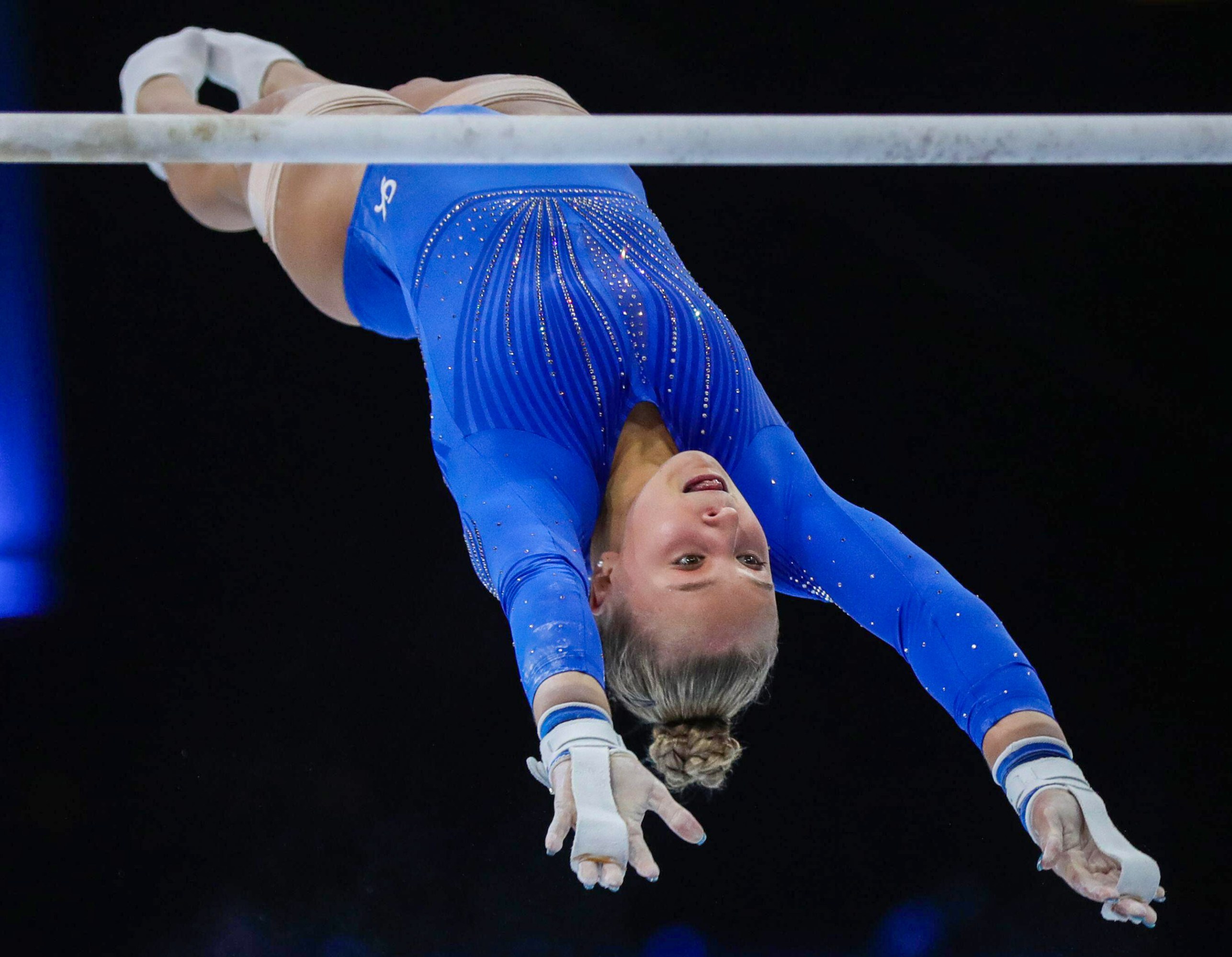
That’s one reason Kaia (whose coach is Kim Tanskanen, her mother) is hopeful about how JSS could change competition: “I feel just like the scoring could be more even,” she says.
“Especially the smaller countries that compete internationally—I feel the judges just have this assumption of what’s going to occur before they even start the routine, and so they sort of judge based off that,” says Emma Spence, an elite Canadian gymnast who competed on the 2022 World Championships. “If we will eliminate that, I feel it would make it just a little more of a good likelihood for everyone.”
While Butcher insists that judges “hopefully are leaving their biases behind them,” he too believes the JSS could help eliminate these aspects and do more to create a good playing field.
Yet an absence of transparency around how and when JSS is utilized in competition may undermine this ideal. Rating sheets at FIG events don’t currently include inquiries, so there are not any recorded details about how routines were reviewed in competition, including whether JSS was used. Rating sheets don’t include itemized deductions, either. With the intention to determine when JSS was used on the 2023 World Championships, I needed to contact individual judges who’re high up within the FIG; even they couldn’t tell me exactly how over and over the JSS was used. This information simply isn’t recorded.
I used to be only able to substantiate it was utilized in the case of Srbić after connecting with the boys’s technical president; Srbić said via email that even he didn’t know if JSS was used to make a decision his inquiry.
Butcher told me that following the 2023 World Championships, athletes must have been sent a link to a web site to see how their routines were judged by JSS, to assist them make improvements. But after I contacted Kaia and Kim Tanskanen after the competition, they said she hadn’t received any details about AI judging either during or after the competition. (Butcher says this is probably going a communication issue with the Finnish federation, though Satu Murtonen, the technical director of Finland’s Women’s Artistic Gymnastics, tells me, “Unfortunately, I don’t remember receiving any information in regards to the robot judging.”)
When asked more broadly about transparency, Butcher points out that a lack of understanding about scoring isn’t dissimilar from the situation in other sports by which “athletes and coaches don’t get specific information regarding the deliberations” of judges or referees. He also says the JSS project “will proceed to evolve in offering greater fairness and transparency.”
Looking ahead, Fujitsu is concentrated on commercializing the technology in order that it may well be sold to gymnastics federations to make use of in practice. “Training is absolutely where we want this,” Butcher says. “We want the federations to give you the chance to buy the Fujitsu system … and thru that use, the gymnasts improve.”
Kim Tanskanen worries this will likely deepen the divide between wealthy programs and poorer ones which may not give you the chance to afford the technology, again threatening the notion of a good playing field.
Butcher admits this is solely the truth: “Well-funded national federations all the time have a bonus in every sport. It’s an unlucky disparity with few solutions.”
The
As Kaia Tanskanen moved across the ground during her qualifications routine in Antwerp, she danced to the beat of her music and, at times, acted out the sound effects: a dramatic breath in, the tapping of a cowbell. After her final tumbling pass, a double tuck, she looked directly on the judges with a smile.
She was bringing something to her gymnastics that she wasn’t in a position to on vault or bars: self-expression. Her routine on floor is a real performance, and one where she strives to form a relationship with the judges, she says, by making eye contact to “pull them in with my expressions.”
It is that this a part of the game that, before the 2023 World Championships began, Kim Tanskanen anxious might be lost with the emergence of AI judging.
“You’ll be able to’t take a look at a robot’s face and have it look back at you,” she says.
The performance component of a gymnast’s routine is something that has, more recently, been encouraged as a strategy to preserve the “artistic” side of the game, whilst the abilities get ever harder.
“Artistry is a vital a part of our discipline, and we wish to see each,” Gratt said in an email. “The facility/energy of the difficulties on one hand, but in addition the grace, femininity, and elegance shown through the choreography.”
While the emphasis on artistry makes the game more fun to observe, it may well also make scoring more subjective. How exactly does one judge what the Code of Points calls “confidence of performance”?
“That’s probably essentially the most difficult task for this Fujitsu system to give you the chance to evaluate,” Butcher says. “It’s a sense greater than something that’s identifiable, like bent knees and flexed feet.” Fujitsu itself echoes this sentiment: “The notion that AI might be used to evaluate what is taken into account beautiful to people instead of humans … there are some parts for which this may be technically feasible and a few where it simply isn’t,” says Fujitsu’s Tomisaka.
Though JSS still isn’t used to evaluate artistry today, Butcher admits he can’t say how far the system will go in the longer term: “The long-term goal continues to be being discussed,” he says. But he’ll say that, at the very least as of now, it continues to be considered supplemental to what the human judges are doing.
Gratt agrees. “Technology is all the time good if we will use it as an extra support to be higher, to have more accuracy, to have feedback for those who are unsure,” she says. “But I feel technology alone can be not working, because I feel it needs to be a mixture of each [AI and human judging] that makes the game more fair.”
All these questions will come to a head soon enough. The Paris Olympics are only six months away, though the FIG declined to comment on whether JSS will probably be used then. The body answerable for gymnastics scoring on the Olympics, OMEGA, also declined to comment.
Will AI ever give you the chance to indicate a Nadia Comaneci? Fifty years ago, something about her caught the judges’ eyes and put her on the highest of the rostrum. It was something you may’t train a gymnast to do, and something you may’t train an individual to acknowledge. Perhaps at some point, an algorithm could tell us what that “something” was.
But within the meantime, it has a distinct role to play. When Srbić filed his inquiry, his rating didn’t go down. After a review using JSS, his rating jumped by .2 points—enough to get him a silver medal at Worlds, and that all-important place on the upcoming Olympics.
Bleacher ReportTeen VogueNational Geographic