
Thirteen years ago, as an project for a journalism class, I wrote a silly short story a few man who eats luxury cat food. This morning, I sat and watched as a generative AI platform called Lore Machine brought my weird words to life.
I fed my story right into a text box and got this message: “We’re identifying scenes, locations, and characters in addition to vibes. This process can take as much as 2 minutes.” Lore Machine analyzed the text, extracted descriptions of the characters and locations mentioned, after which handed those bits of data off to an image-generation model. An illustrated storyboard popped up on the screen. As I clicked through vivid comic-book renderings of my half-forgotten characters, my heart was pounding.
After greater than a yr in development, Lore Machine is now available to the general public for the primary time. For $10 a month, you’ll be able to upload 100,000 words of text (as much as 30,000 words at a time) and generate 80 images for brief stories, scripts, podcast transcripts, and more. There are price points for power users too, including an enterprise plan costing $160 a month that covers 2.24 million words and 1,792 images. The illustrations are available a spread of preset styles, from manga to watercolor to pulp ’80s TV show.
Zac Ryder, founding father of creative agency Modern Arts, has been using an early-access version of the tool since Lore Machine founder Thobey Campion first showed him what it could do. Ryder sent over a script for a brief film, and Campion used Lore Machine to show it right into a 16-page graphic novel overnight.
“I remember Thobey sharing his screen. All of us were just completely floored,” says Ryder. “It wasn’t a lot the image generation aspect of it. It was the extent of the storytelling. From the flow of the narrative to the emotion of the characters, it was spot on right out of the gate.”
Modern Arts is now using Lore Machine to develop a fictional universe for a manga series based on text written by the creator of Netflix’s .
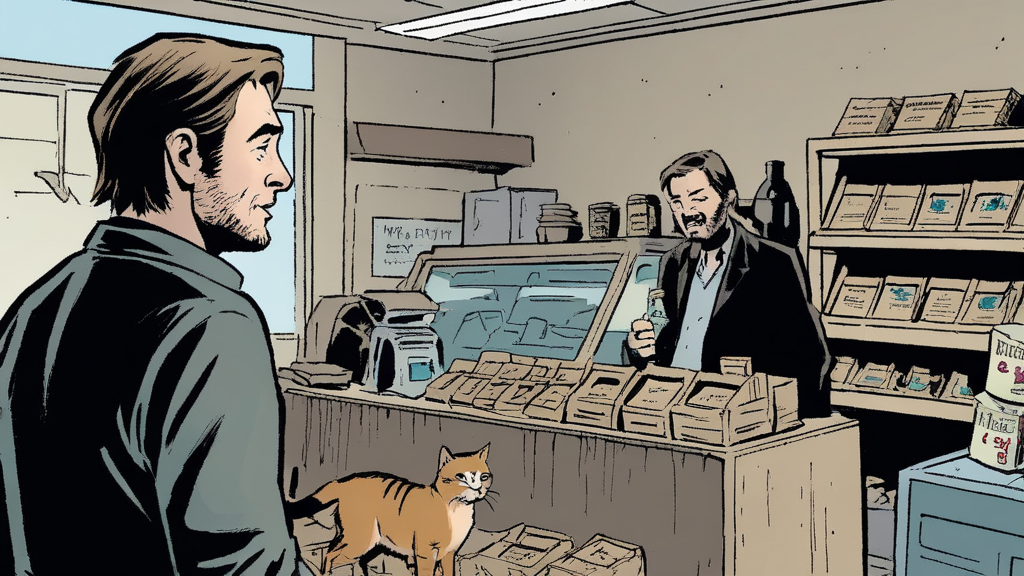
Under the hood, Lore Machine is built from familiar parts. A big language model scans your text, identifying descriptions of individuals and places in addition to its overall sentiment. A version of Stable Diffusion generates the photographs. What sets it apart is how easy it’s to make use of. Between uploading my story and downloading its storyboard, I clicked perhaps half a dozen times.
That makes it one among a brand new wave of user-friendly tools that hide the stunning power of generative models behind a one-click web interface. “It’s loads of work to remain current with latest AI tools, and the interface and workflow for every tool is different,” says Ben Palmer, CEO of the Recent Computer Corporation, a content creation firm. “Using a mega-tool with one consistent UI could be very compelling. I feel like that is where the industry will land.”
Look! No prompts
Campion arrange the corporate behind Lore Machine two years ago to work on a blockchain version of Wikipedia. But when he saw how people took to generative models, he switched direction. Campion used the free-to-use text-to-image model Midjourney to make a comic-book version of Samuel Taylor Coleridge’s . It went viral, he says, nevertheless it was no fun to make.

“My wife hated that project,” he says. “I used to be as much as 4 within the morning, every night, just hammering away, attempting to get these images right.” The issue was that text-to-image models like Midjourney generate images one after the other. That makes it hard to keep up consistency between different images of the identical characters. Even locking in a particular style across multiple images may be hard. “I ended up veering toward a trippier, abstract expression,” says Campion.
The experience made him see that this tech needed to be loads easier to make use of. Campion won’t say exactly how Lore Machine manages to maintain its images and elegance consistent across a series of illustrations. It’s pretty good, but not perfect: in a single scene from my story a short-haired character has grown bangs; in one other, a personality appears twice. The illustrations can begin to feel generic, too. But compared with doing this by hand, prompt by prompt, it’s an enormous step up.
“The consistency is great,” says Ryder. It’s given Modern Arts the arrogance to make use of Lore Machine in a project with one among its clients. “Had we consistently needed to return and fix consistency issues, there’s no way we might have been capable of deliver on time,” he says.
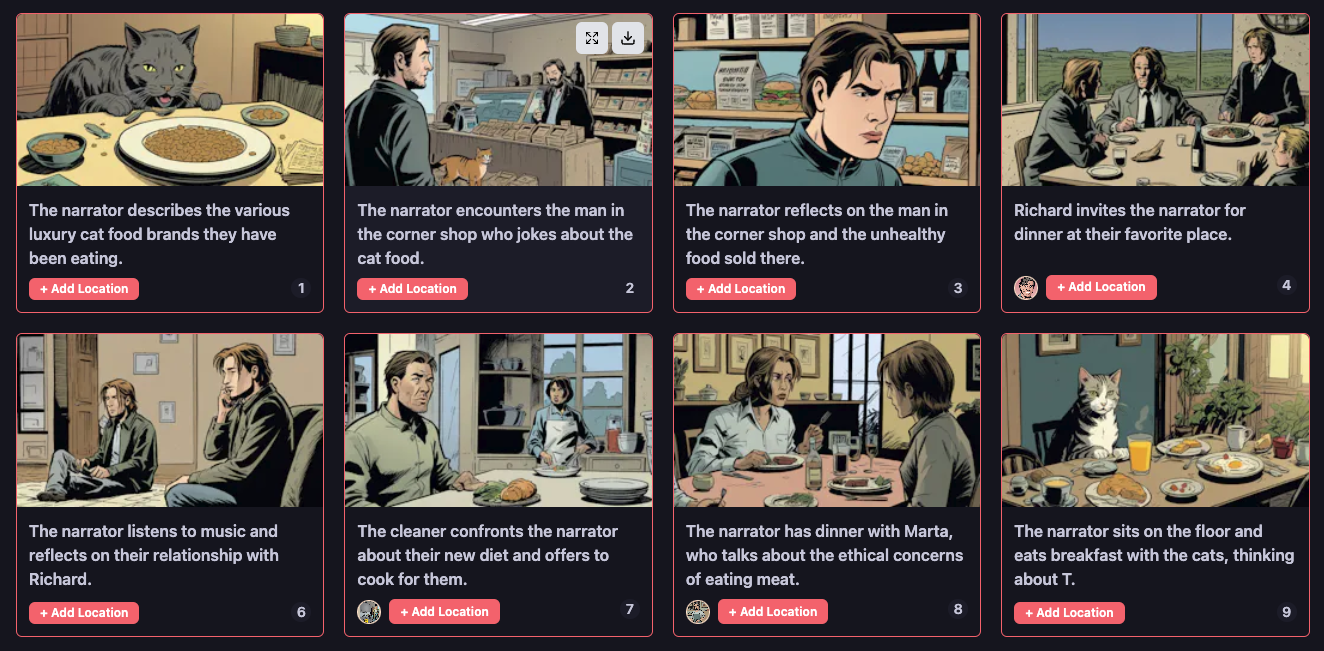
Like all generative models, the tech behind Lore Machine will spit out toxic content on demand. Campion says they’ve stopped it from generating images depicting violence or hateful stereotypes. But otherwise, he’s unwilling to curb artists’ creative expression. Generating illustrations for celebrity fan fiction is fair game, for instance.
Much of the initial interest in Lore Machine has come from marketing agencies. But Campion hopes the general public release will encourage a wider range of users to try it out. Six months ago, he says, he got a call from the principal of a college in Manhattan for youths with learning disabilities. The principal desired to run his textbooks through the tool in order that his kids could have images to have a look at. “I hadn’t even considered that. I used to be too stuck in a Hollywood mindset,” says Campion.