
The appearance of Large Language Models for Code (Code LLMs) has significantly transformed the software development landscape, offering unprecedented capabilities in code generation, bug fixes, and even the automation of routine coding tasks. Among the many vanguards of this technological evolution is the BigCode project from a big group of researchers from 30+ top-class universities and institutions, which introduced StarCoder2, a groundbreaking model designed to push the boundaries of code generation through advanced machine-learning techniques.
StarCoder2 is a sophisticated model trained on a various and expansive dataset, including Software Heritage repositories and GitHub pull requests. It has expanded its training set to be 4 times larger than its predecessor. StarCoder2 is accessible in various sizes (3B, 7B, 15B), with each model demonstrating exceptional performance in Code LLM benchmarks. The 15B variant has surpassed its peers in performance, highlighting the project’s success in enhancing code generation capabilities.
The BigCode project emphasizes the moral development and transparency of Code LLMs. It ensures openness and accessibility by releasing StarCoder2’s model weights under an OpenRAIL license and enhancing data transparency by releasing Software Heritage persistent IDs for its training dataset. This approach not only sets a brand new standard for performance in code generation but additionally fosters a culture of collaboration and innovation inside the community, allowing for further advancements in the sphere.
At the guts of StarCoder2’s success is The Stack v2, a meticulously curated dataset that may be a staggering ten times larger than its predecessor. This quantitative and qualitative expansion incorporates various data sources corresponding to Software Heritage repositories, GitHub pull requests, Kaggle notebooks, and extensive code documentation. This dataset’s sheer diversity and volume enable StarCoder2 to grasp and generate code with unprecedented sophistication across various programming languages.
Training models like StarCoder2 involve a fancy, multi-faceted process. The team launched into an in depth data cleansing, filtering, and subsampling journey to refine the huge 67.5 TB raw dataset to a more manageable and focused 3TB training set. This process was crucial for enhancing the model’s performance, ensuring it learned from high-quality, relevant code examples. The researchers developed models with various capacities, 3B, 7B, and 15B parameters, to explore the impact of model size on performance.
In comprehensive evaluations against other Code LLM benchmarks, StarCoder2 models consistently outperformed their counterparts, particularly in tasks requiring code completion, editing, and reasoning. The smaller 3B model excelled in most benchmarks, rivaling models of comparable size. Meanwhile, the larger 15B variant not only surpassed models of comparable size but additionally showed competitive or superior performance against much more substantial models, marking a big achievement in the sphere of Code LLMs.
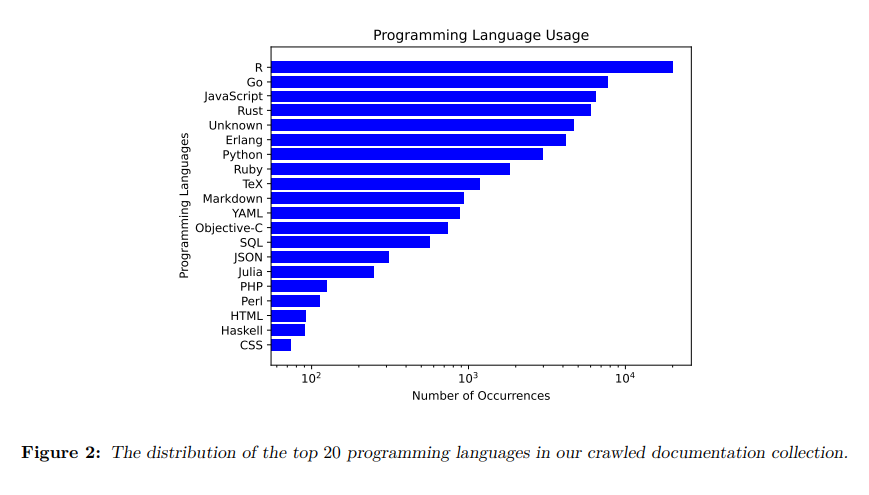
The BigCode project’s commitment to openness and transparency is reflected in its decision to release StarCoder2 model weights under an OpenRAIL license and disclose the sources of their training data by publishing Software Heritage persistent IDentifiers (SWHIDs). This gesture of goodwill towards the scientific community goals to foster collaboration and innovation, allowing others to construct upon their work and further advance the sphere of code generation.
In conclusion, StarCoder2, a next-generation code generation LLM, leverages The Stack v2, an enormous 3TB training dataset derived from the 67.5 TB Software Heritage archive, now ten times its predecessor’s size. Featuring models with 3B, 7B, and 15B parameters, StarCoder2 excels in code completion, editing, and reasoning, setting recent benchmarks for its size categories. With a commitment to transparency, the project releases model weights and training data details to foster trust and encourage further innovations in the sphere.
Take a look at the Paper. All credit for this research goes to the researchers of this project. Also, don’t forget to follow us on Twitter and Google News. Join our 38k+ ML SubReddit, 41k+ Facebook Community, Discord Channel, and LinkedIn Group.
In case you like our work, you’ll love our newsletter..
Don’t Forget to hitch our Telegram Channel
You might also like our FREE AI Courses….

Hello, My name is Adnan Hassan. I’m a consulting intern at Marktechpost and shortly to be a management trainee at American Express. I’m currently pursuing a dual degree on the Indian Institute of Technology, Kharagpur. I’m enthusiastic about technology and wish to create recent products that make a difference.