
Google Colab, short for Google Colaboratory, is a free cloud service that supports Python programming and machine learning. It’s a dynamic tool that allows anyone to write down and execute Python codes on a browser. This platform is favored for its zero-configuration required, easy sharing of projects, good free GPUs, and great paid ones, making it a go-to for college students, data scientists, and AI researchers. Whether your projects involve data evaluation, machine learning, or simply learning to program in Python, Google Colab provides a robust, no-setup-required platform to perform your goals.
Now, Let’s dive right into a 6-step tutorial on the best way to run your first code snippet on Google Colab.
- Trying to find Google Colab
To start, seek for Google Colab in your web browser. Type “Google Colab” into the search bar, and click on on the primary link to navigate to the Colab homepage. Here, you’ll be greeted with options to start out or explore existing projects.
- Making a Recent Notebook
Upon reaching the Google Colab homepage, search for an choice to create a brand new notebook, normally visible as a button or inside the ‘File’ menu. Clicking this can open a brand new tab where you’ll be able to start coding or writing.
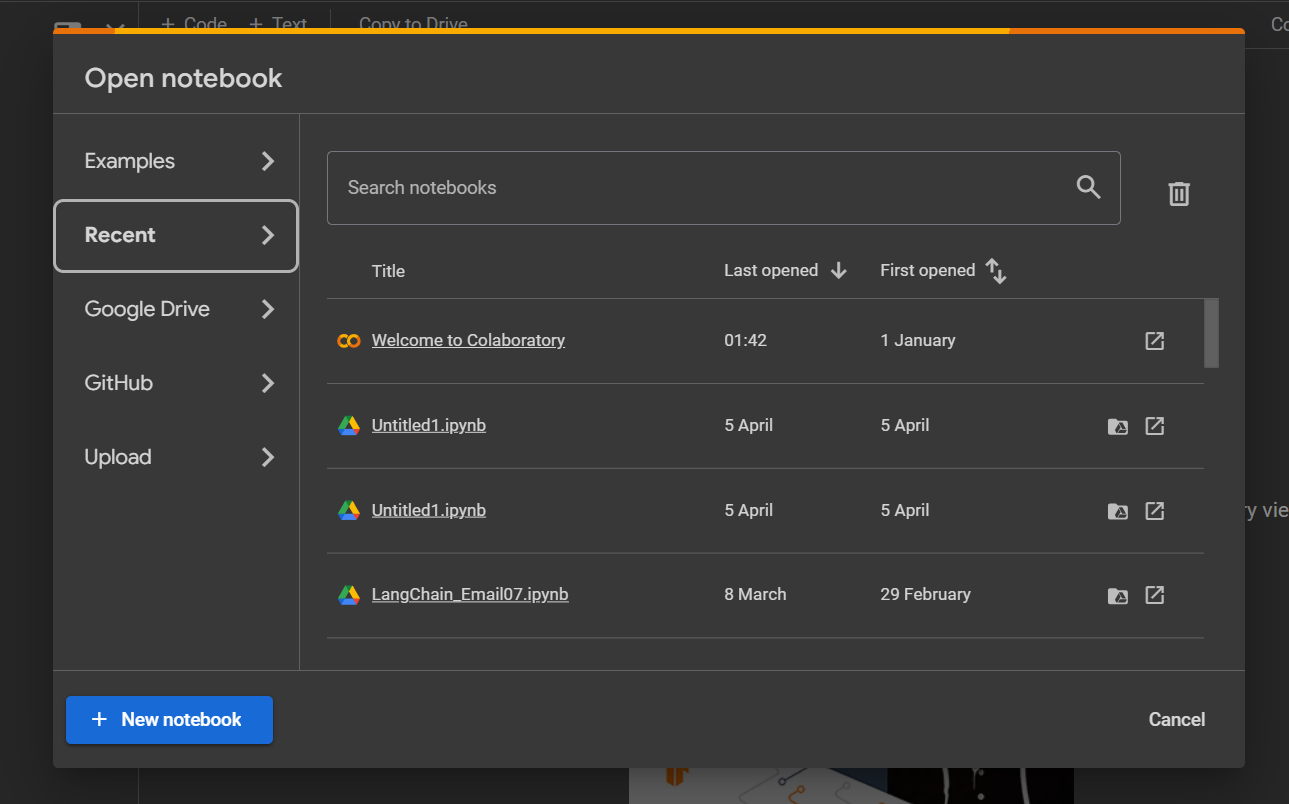
- Renaming Your Notebook
Your recent notebook may have a default name like “Untitled##,” which you’ll be able to change by clicking the title. Renaming your notebook to something more descriptive of its content can assist with organization.

- Connecting to the Kernel
Before coding, connect your notebook to a kernel by clicking the ‘Connect’ button at the highest right. This connects your notebook to computational resources.

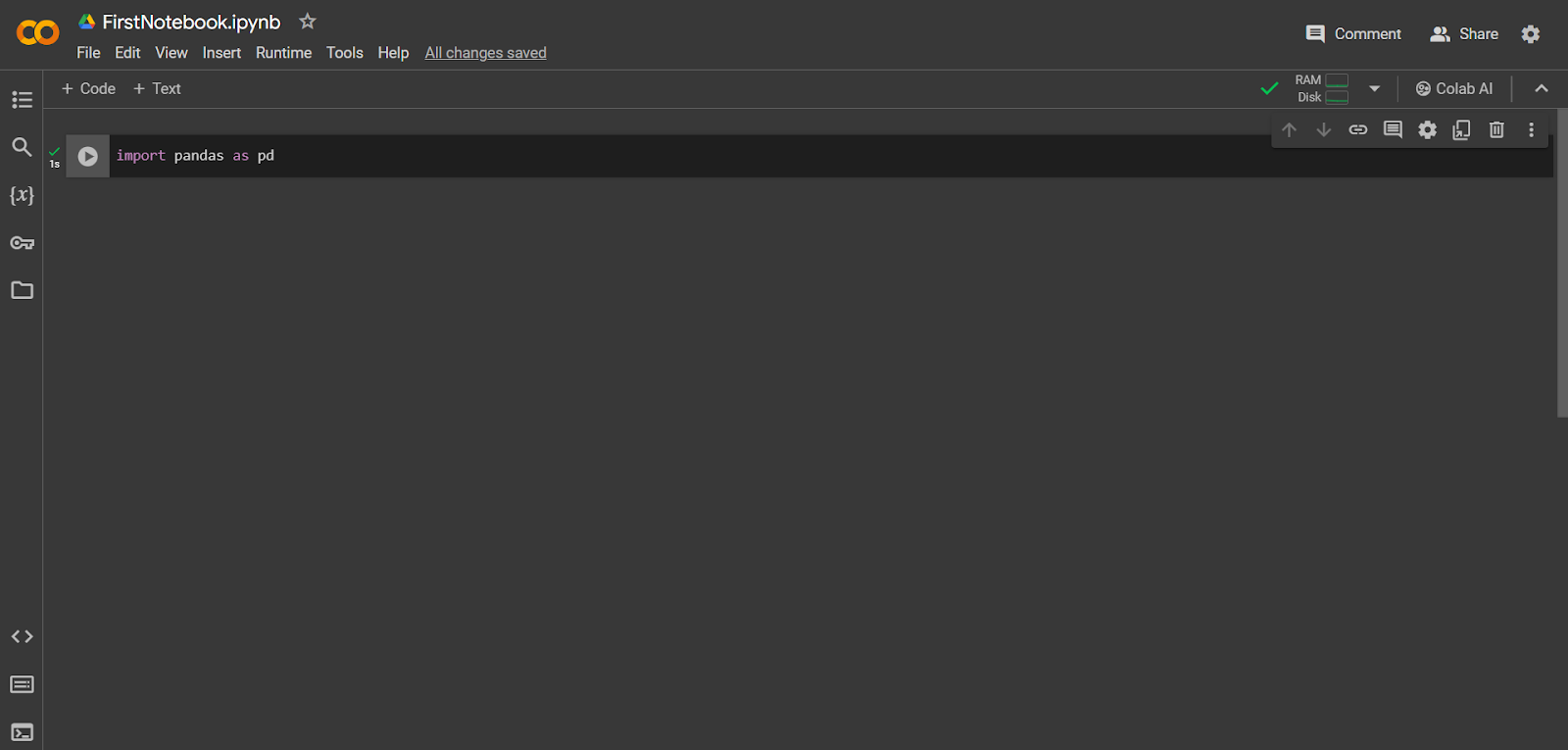
- Running a Code Block
To run Python code, type your code right into a code block, hit the play button to the left of the block, or use Ctrl+Enter. The output will probably be displayed below.
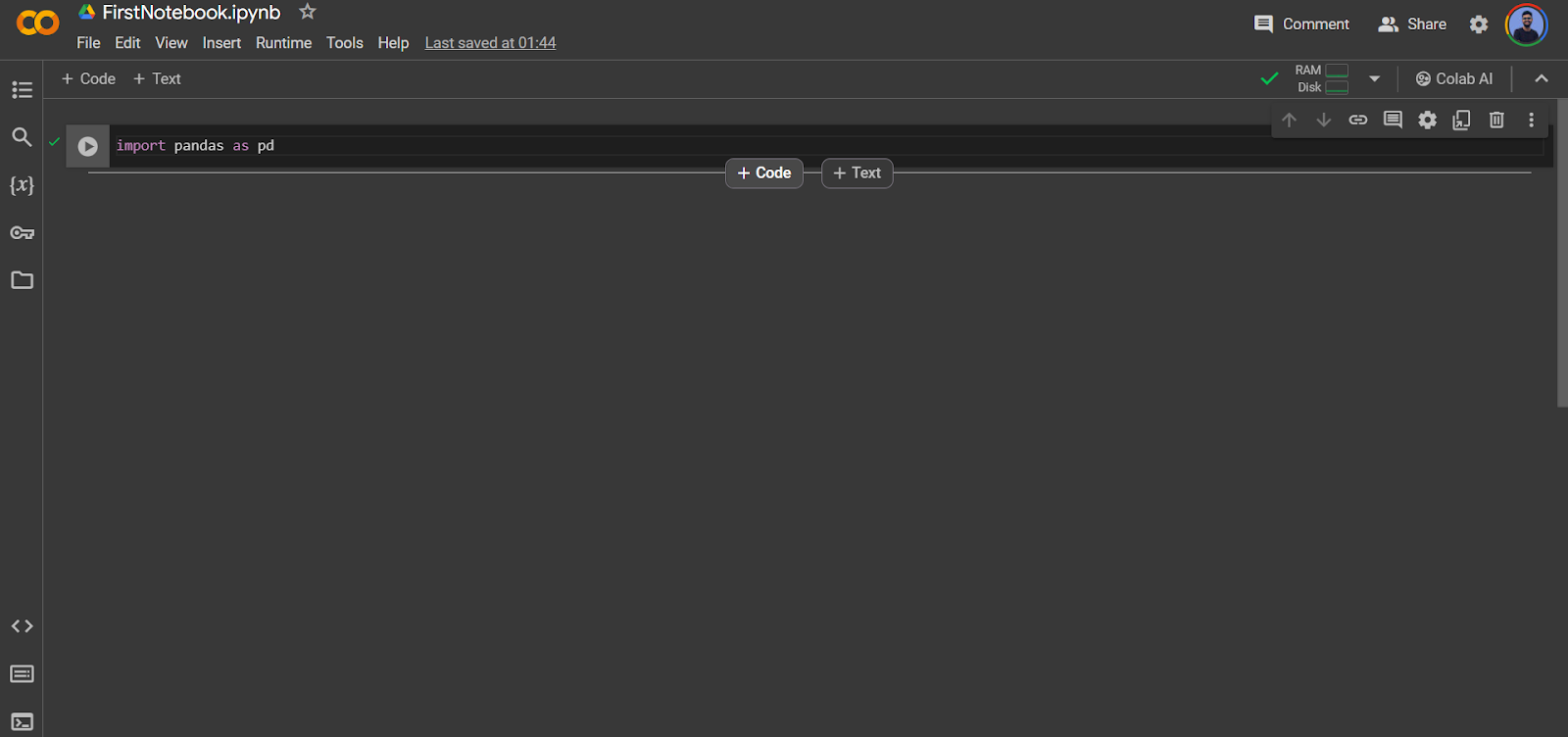
- Adding Recent Blocks
Expand your notebook by adding more code or text blocks through the ‘+ Code’ or ‘+ Text’ buttons. This organization allows for a mix of documentation and coding.
Key Features of Google Colab
After discussing a small tutorial on the best way to start using Google Colab. Let’s check some points encapsulating the primary features of Google Colab that make it different and versatile:
- Google Colab provides free access to NVIDIA GPUs, making it easier for users to run machine learning models and data evaluation without expensive hardware.
- Start coding immediately with none complicated setup processes. Colab notebooks run entirely within the cloud, saving you from the trouble of putting in libraries and dependencies in your local machine.
- Share your Colab notebooks like you’ll with Google Docs or Sheets. Collaborate with colleagues or classmates in real-time, making it ideal for team projects and academic purposes.
- Seamlessly save your notebooks in Google Drive. This integration facilitates easy project management and sharing and allows users to access data stored in Drive.
- Colab comes pre-loaded with libraries equivalent to TensorFlow, PyTorch, Keras, and OpenCV, allowing users to dive straight into data science projects without additional installations.
- Create interactive data visualizations using tools like Matplotlib, Seaborn, and others directly in your notebooks, making data evaluation more intuitive and insightful.
- While Colab provides a managed environment with pre-installed libraries, it allows users to put in any Python package, use Jupyter extensions, and customize their environment.
- Easily import data out of your local system, Google Drive, and even from GitHub. Colab also supports various formats, including CSV, JSON, and Excel, facilitating diverse data science and machine learning projects.
- Execute Linux shell commands directly in Colab notebooks, offering users the flexibleness to perform operations like file system management and package installation inside their coding environment.
- For users needing more power, Google offers Colab Pro and Colab Pro+, which give more memory, longer runtime, and even access to more powerful GPUs for intensive computation tasks.
These features make Google Colab a flexible and accessible platform for anyone trying to perform data evaluation, machine learning, or any Python-based research or project.
Conclusion
Google Colab simplifies the coding process in Python, offering an accessible platform for various projects from data evaluation to machine learning. With the power to run code, access some good free GPUs and great paid ones, and share your work, it’s a useful resource for the trendy programmer or researcher. This guide has walked you thru the initial steps, from creating your first notebook to executing Python code, all inside a platform that mixes ease of use with powerful computational resources.

Hello, My name is Adnan Hassan. I’m a consulting intern at Marktechpost and shortly to be a management trainee at American Express. I’m currently pursuing a dual degree on the Indian Institute of Technology, Kharagpur. I’m obsessed with technology and wish to create recent products that make a difference.